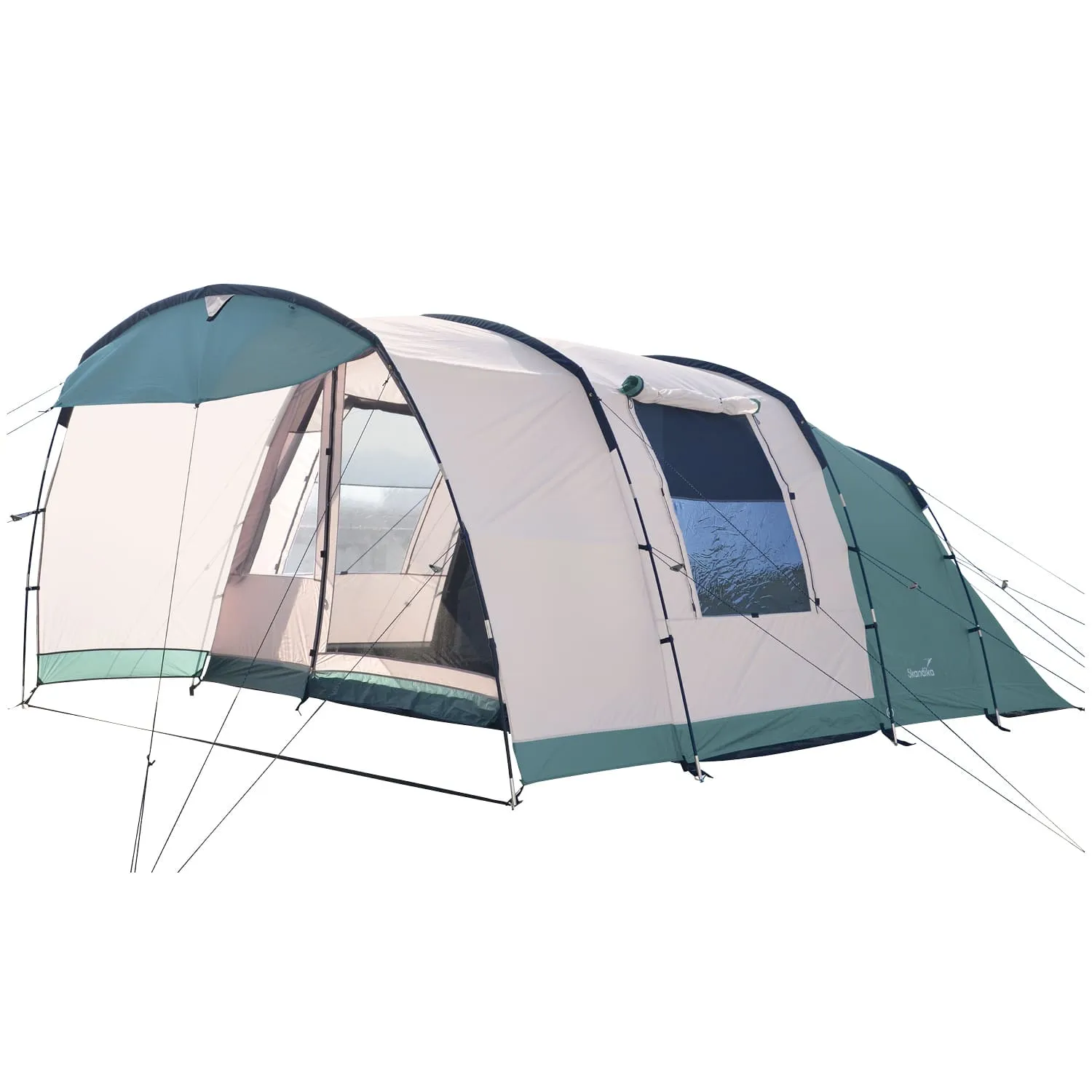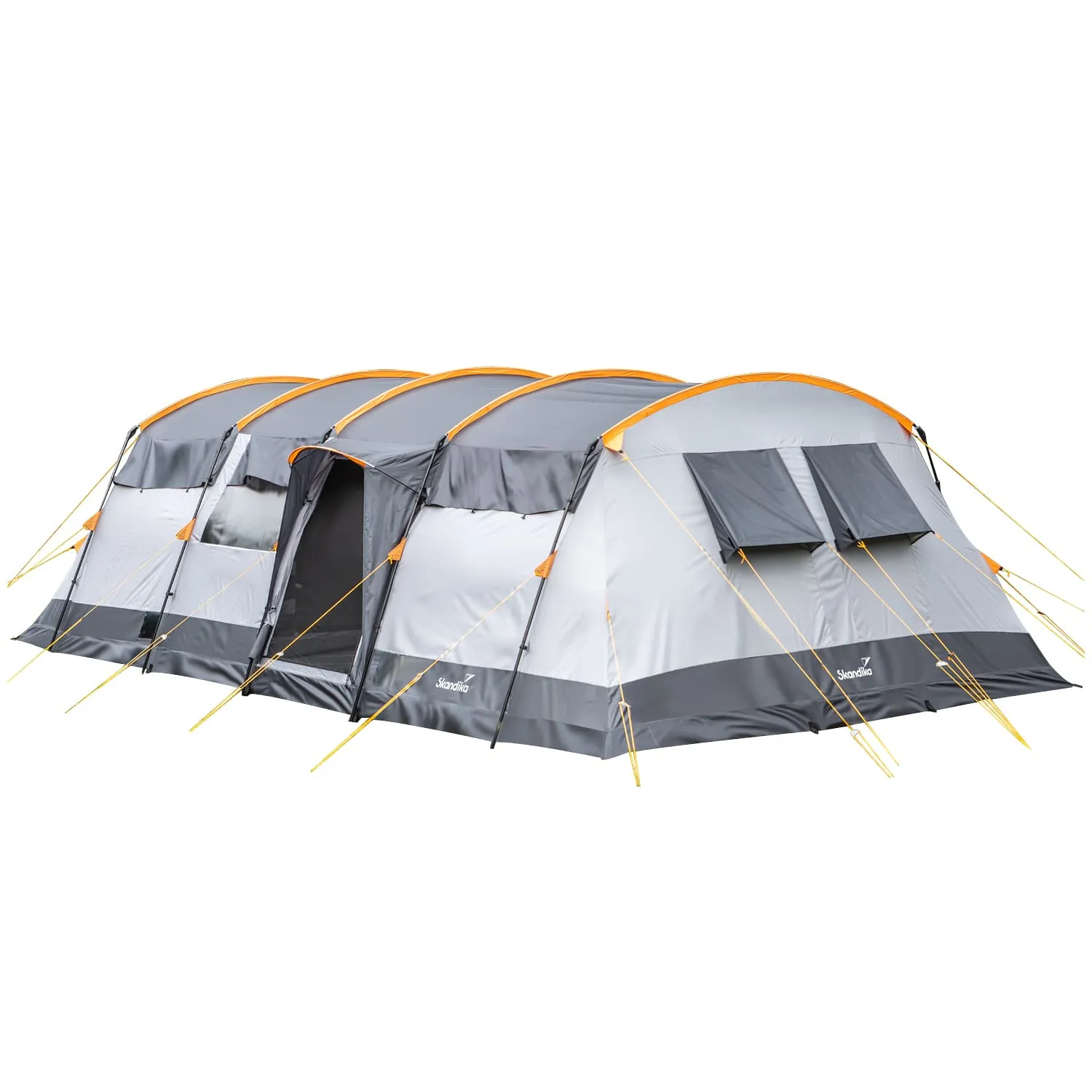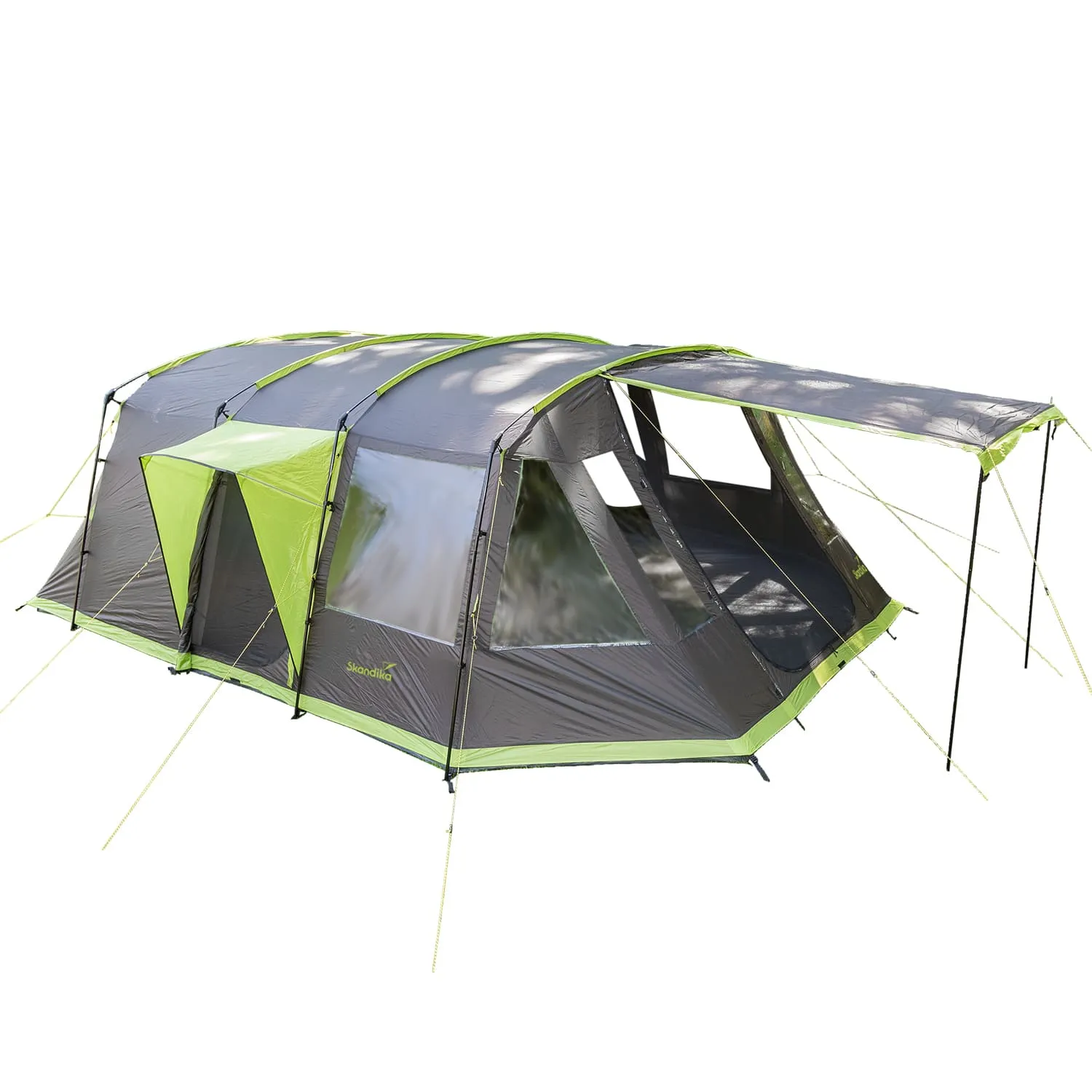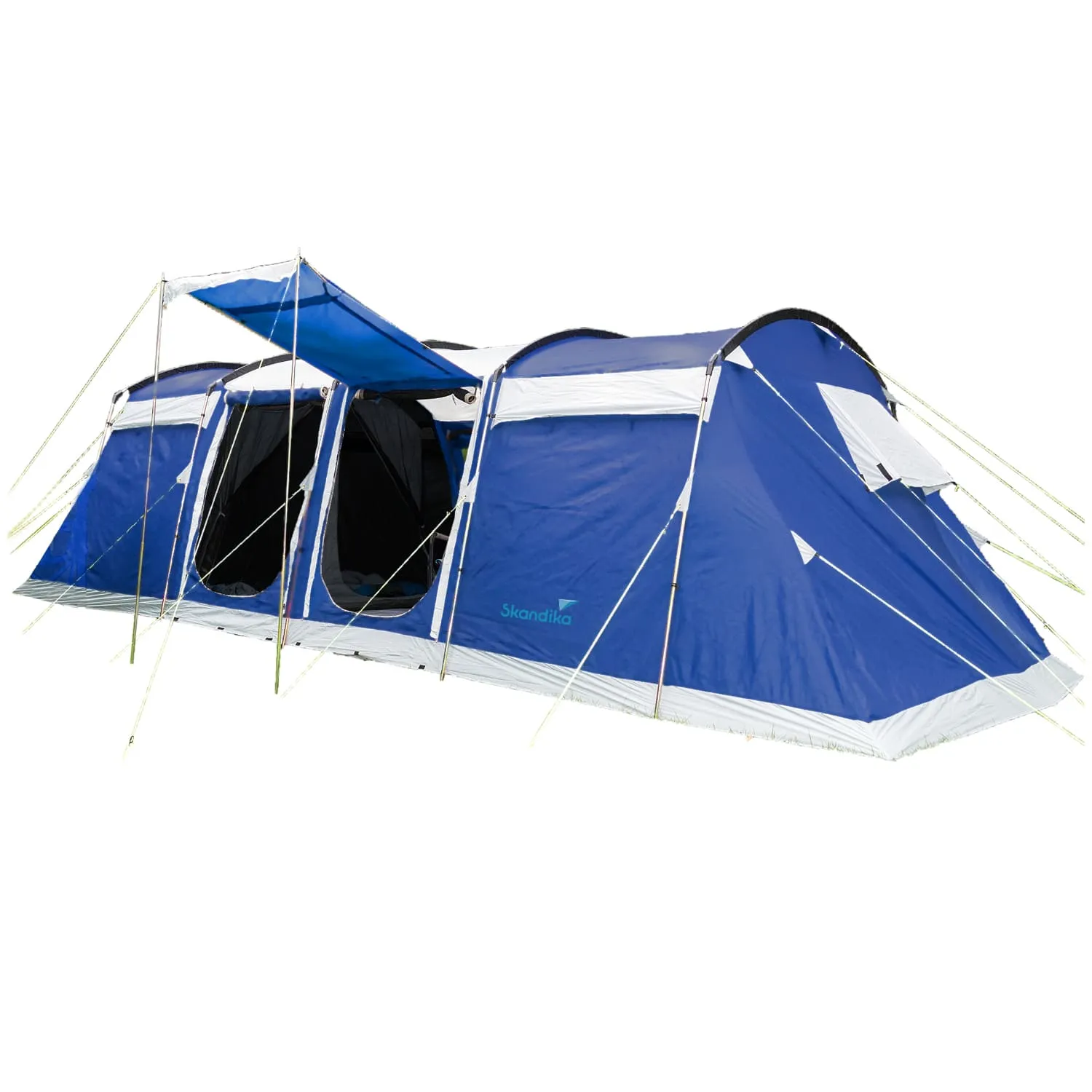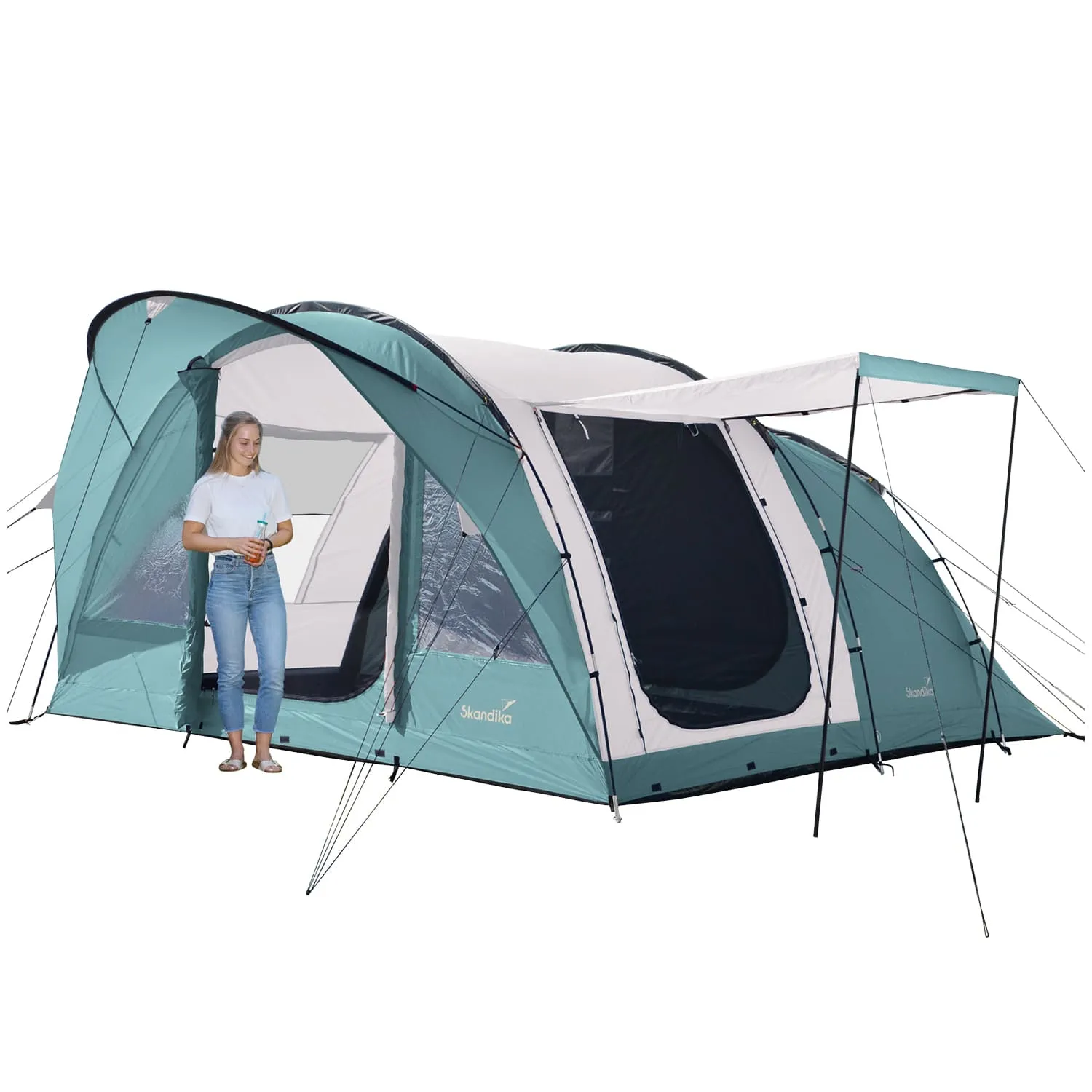
Tunnel tent Egersund 5 Sleeper Protect
329,00 €RRP 469,00 €
When looking for a new waterproof tent, you’ll come across the term ‘water column’. 2,000 mm, 5,000 mm, 10,000 mm – but what do these figures actually mean? And what water column do you really need to stay dry on your next camping trip? In this blog post, we’ll explain what the water column tells you about a tent, how it’s measured and why it’s only one part of weather protection.

The water column indicates how waterproof the material of a tent is. The higher the value in millimetres, the longer the fabric can withstand water pressure without letting water through.
For you, this means: The tent’s water column is an important guide when choosing a waterproof tent – particularly in changeable weather or on challenging trips.
The water column is determined in the laboratory. To do this, the tent fabric is stretched over a measuring device which is continuously filled with water. The value, given in millimetres (mm), indicates how high this water column can rise before the first drops penetrate. A water column of 3,000 mm therefore means that the fabric can withstand a water pressure equivalent to 3 metres.
Tents with a water column rating of 5,000 mm can withstand even heavy rain, wind pressure or wet snow, thereby protecting you from damp inside the tent. This is particularly important if you’re camping in bad weather, out and about in the mountains, or if your tent is subjected to heavy use over several days.
Almost all our tents have a water column of between 3,000 and 5,000 mm. With this water column, you’ll be perfectly prepared for changeable weather at any time of year. Also pay attention to the water column rating of the tent floor. This is usually higher, as it has to withstand high pressure from weight and uneven ground.
According to DIN EN ISO 811, a tent with a water column of 1,500 mm or more is considered waterproof – at least as far as the outer tent is concerned. For the tent floor, the threshold is usually 2,000 mm, as it is subjected to greater stress due to body weight and pressure. This may be sufficient for use on summer holidays and in dry areas – for harsher conditions, you should choose a higher water column.
The best water column rating for your tent depends on where you’re travelling to, when you’re camping and what type of tent you’re using. Here’s a brief overview to give you a rough idea of which tent you should choose and what the minimum water column rating should be:
Bear in mind: The more extreme the weather conditions, the more important it is to have a high water column. Experienced trekking campers and camping holidaymakers often opt for a water column rating of at least 5,000 mm for long trips or challenging journeys.
No – even the best tent fabric is useless if the seams and zips aren’t watertight. The quality of your tent’s construction plays a particularly crucial role here. So make sure it has:
You can recognise a fully waterproof tent by its neat workmanship, high-quality materials and clever details such as ventilation openings – not just by the water column rating on the label.

The higher the tent’s water column, the denser the fabric – and this can restrict breathability. A tent with a higher water column should therefore have a few additional features – including the following:
A good compromise for warm temperatures but changeable weather is therefore a tent with a water column of 3,000–5,000 mm and a ventilation system. This ensures good air circulation, prevents condensation and provides you with a waterproof tent.

The water column rating tells you how waterproof your tent is – but it’s only one aspect of weather protection. A tent fabric is considered waterproof from 1,500 mm; for more challenging conditions, you should opt for 3,000 mm or more. However, sealed seams, high-quality zips and good ventilation are also crucial. Look for the complete package – that way, your tent will stay dry whatever the weather.