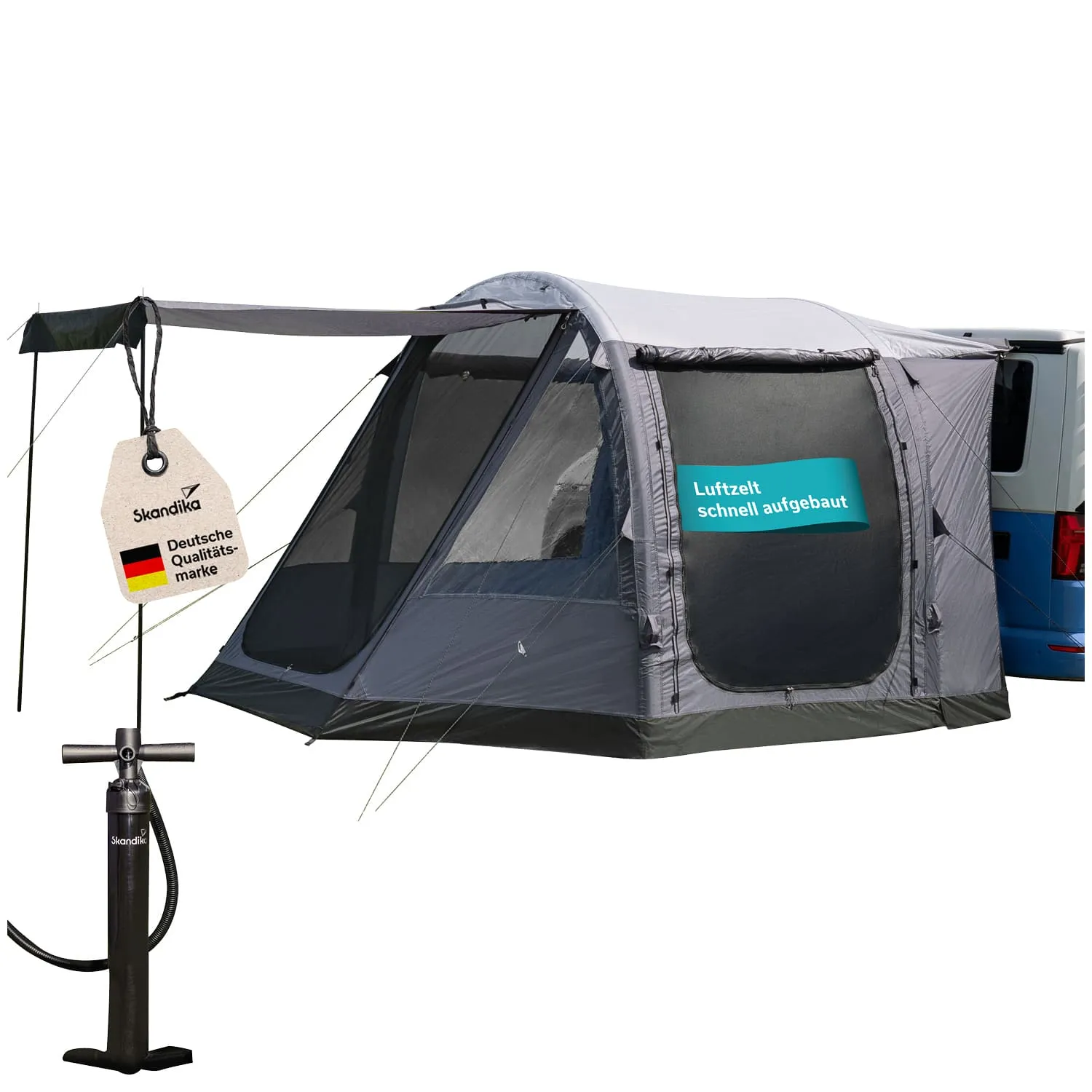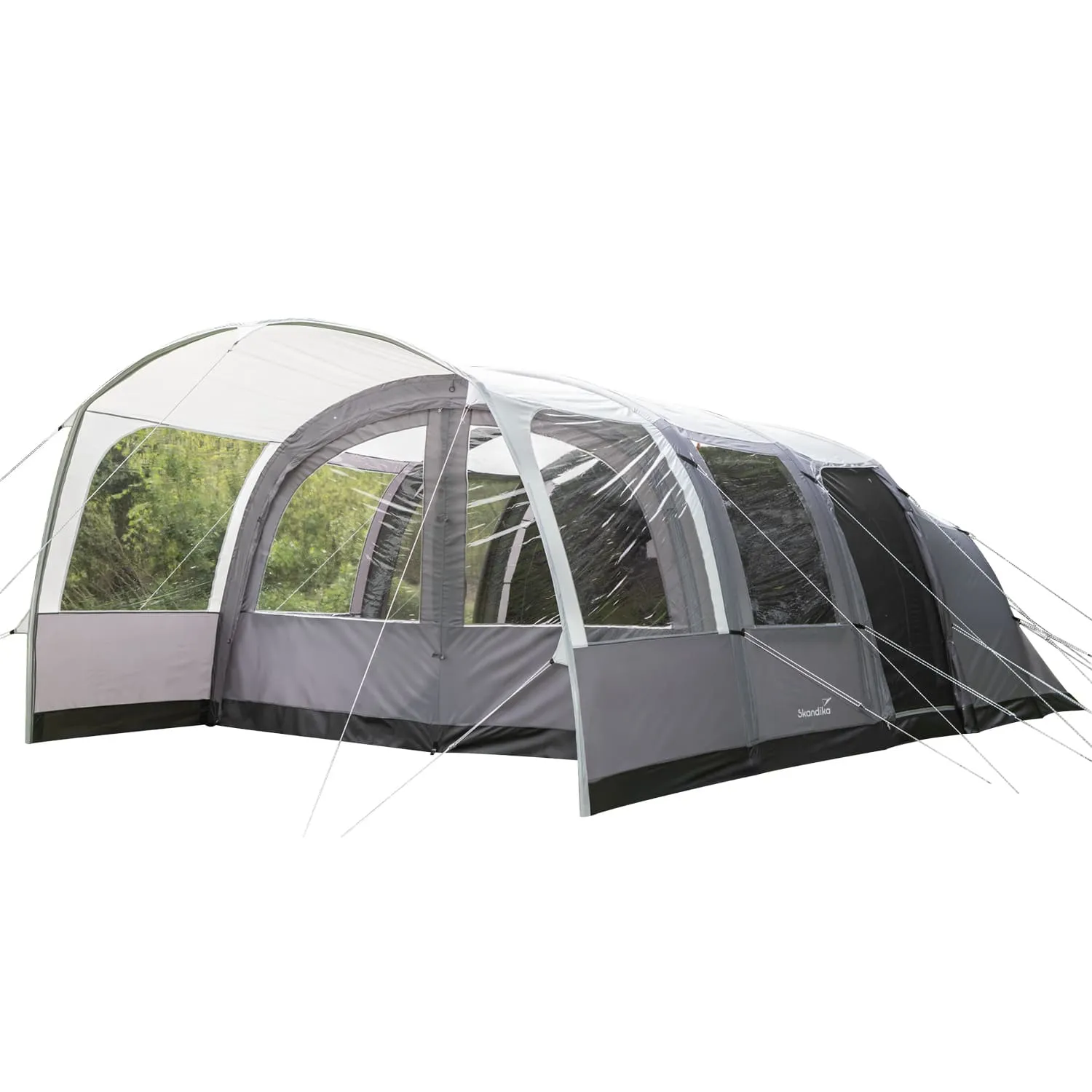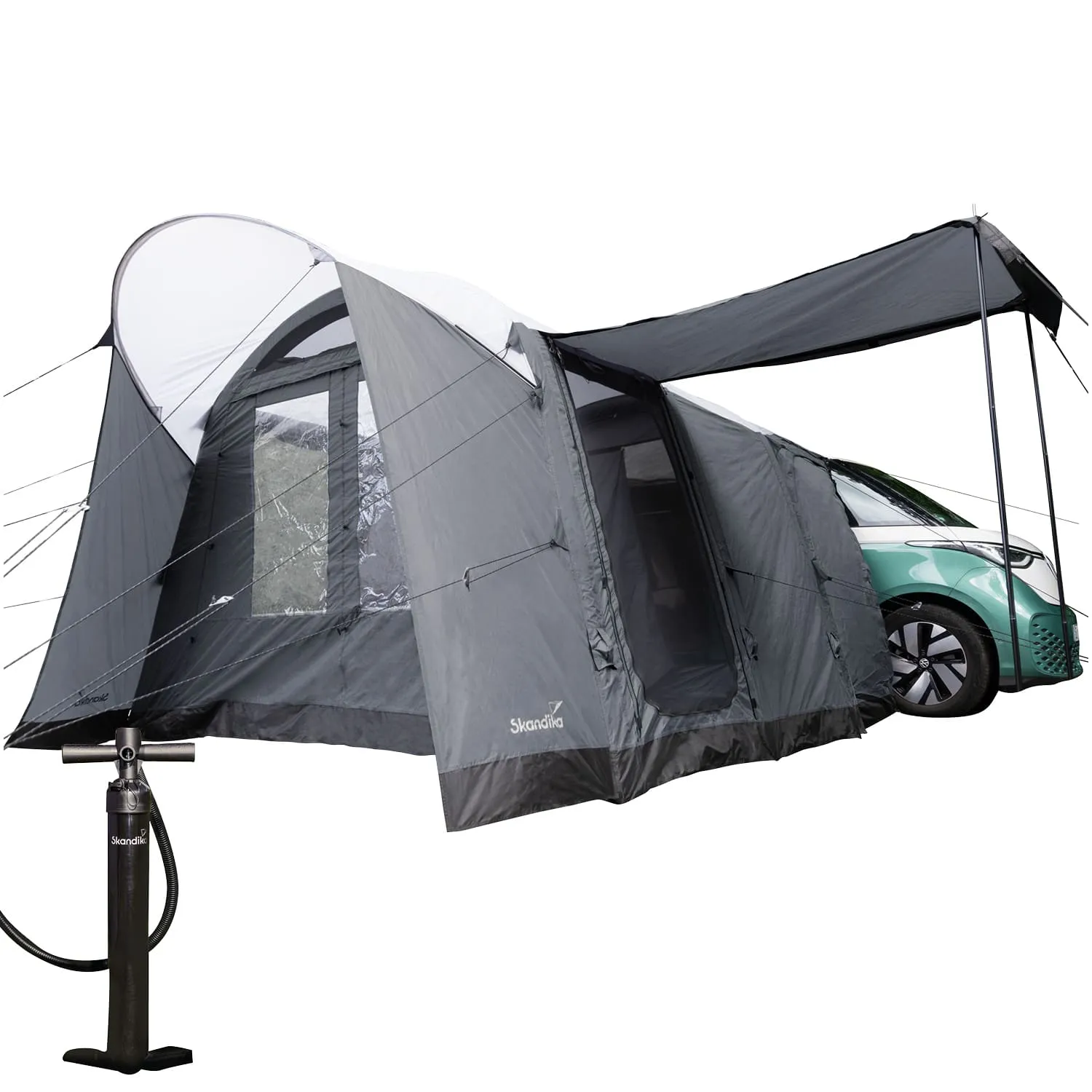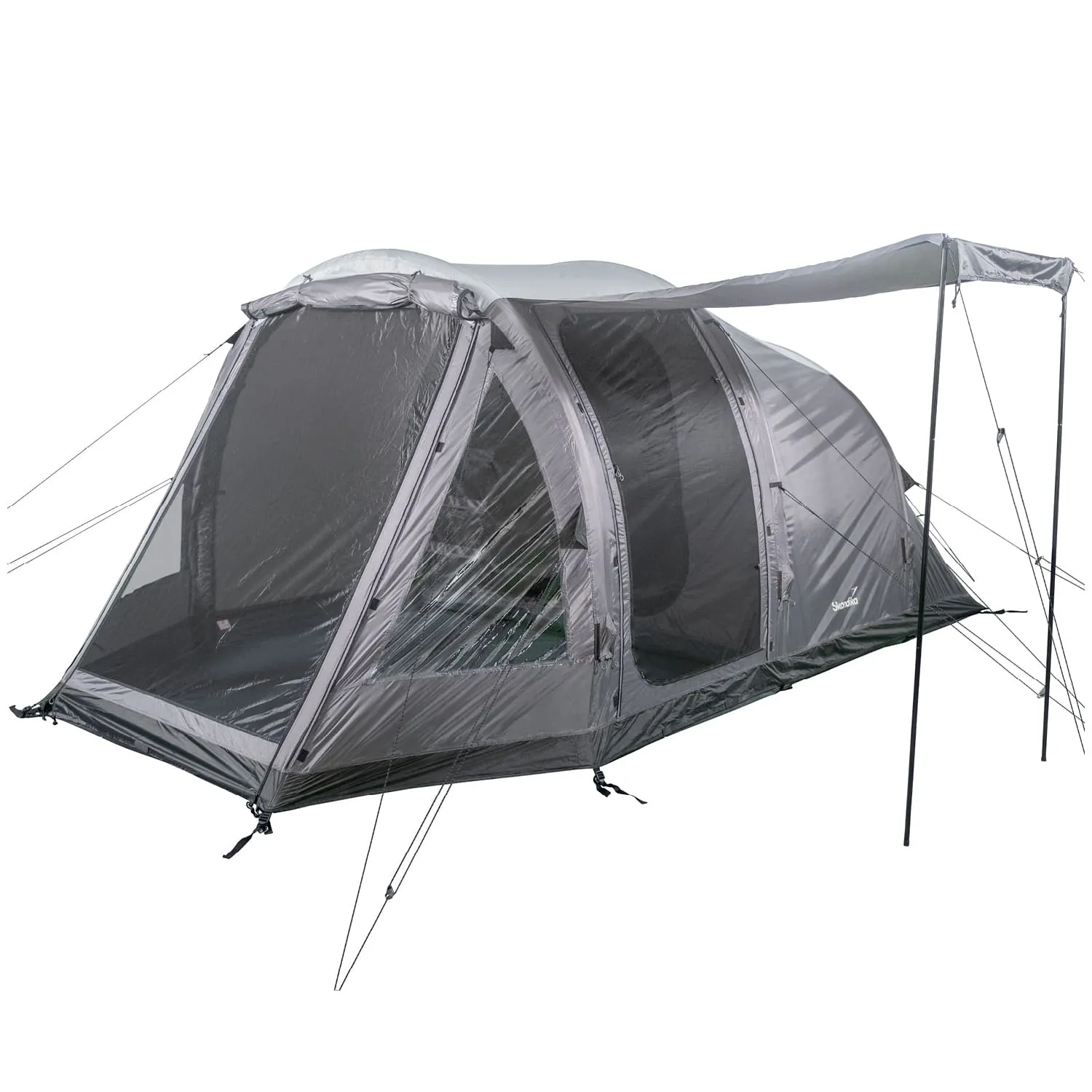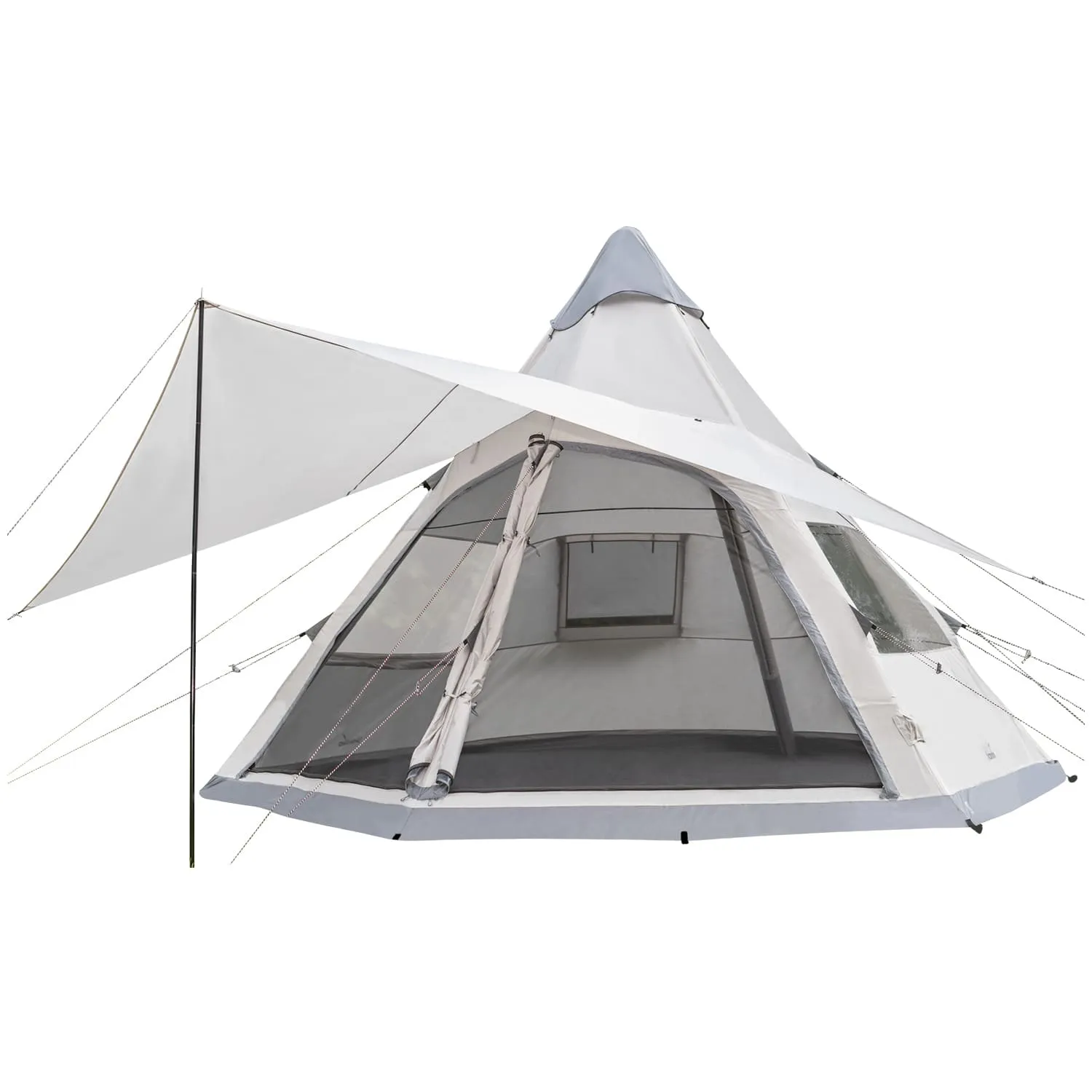
Tipi Hetta 460 Air Protect Plus
319,00 €RRP 399,00 €
Inflatable tents – or air tents – are becoming increasingly popular. No wonder – they’re quick to pitch and you don’t have to spend ages figuring out which poles go where. In this blog post, you’ll find out just how good an air tent really is, who it’s best suited to and what you should bear in mind when pitching it.

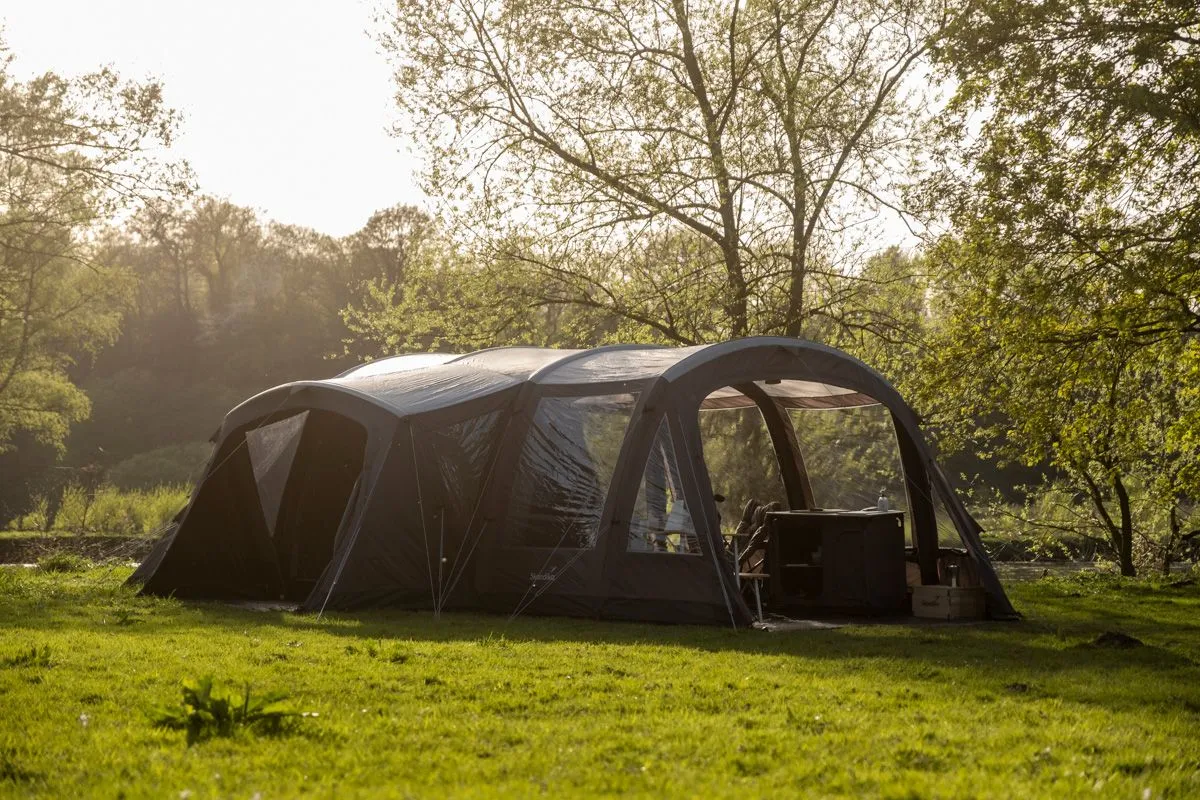
An air tent replaces conventional poles with inflatable air channels. So, instead of poles, air-filled tubes provide the necessary stability for your tent. These are divided into several chambers and are usually made of PVC, TPU or a similar material. This makes it very easy to set up a free-standing air tent that’s ready for use in no time.
An inflatable tent is ideal if you want to get your camping holiday off to a quick, straightforward and stress-free start. This is a huge advantage, especially in bad weather or for family holidays. No complicated poles, no lengthy assembly instructions and no searching for the right parts.
Simply roll it out, secure it, inflate it – and you’re done!
Here’s an overview of the benefits of inflatable tents:
An inflatable tent is the right choice for you if comfort and speed are your top priorities. They are particularly suitable for the following groups
:- Families with children: Inflatable family tents offer plenty of space and comfort.
Inflatable tents, like all other tents, do not offer nothing but advantages for everyone. It all depends on your own needs and what is particularly important to you when it comes to your tent or camping holiday. Here we’ve listed a few points you should bear in mind when it comes to inflatable tents
:- Weight: The tent is often heavier than one with conventional poles. This makes it less suitable for trekking holidays or other trips where you need to keep an eye on weight and pack size. You’ll also need an air pump.
Inside the structure are air tubes made of sturdy material, which you inflate using a hand pump or electric pump. The air pressure gives the tent its shape, allowing it to stand without the need for poles. Depending on the tent’s design, there are single-chamber or multi-chamber systems.
This technology creates a sturdy, weatherproof frame – without the need for poles. The inflatable air chambers also make the tent flexible and resilient, for example in windy conditions or on uneven ground.
Pitching an inflatable tent is much easier than pitching a traditional tent with poles. Here is a brief step-by-step guide:
Yes, even a 6-person inflatable tent can be pitched by just one person. It is precisely this ease of use that makes inflatable tents so popular with solo campers and families.
Most inflatable tents require between 0.6 and 0.8 bar. Please note: Higher pressure does not automatically mean greater stability – quite the opposite, in fact. It can damage the material. It is therefore best to use an air pump with a pressure gauge.
Yes, too much pressure can deform, damage or, in the worst case, cause the air channels to burst. You should therefore always stick to the recommended bar rating. Air expands even more in the summer heat, so it’s best to be a bit more careful when pumping up the tyres.
Inflatable tents are often even more stable than ordinary tents with poles. This is because the tent itself is more flexible. So, whilst it may bend slightly in strong winds, it will not break. It’s important to guy the tent properly – in other words, secure it with enough guy ropes and pegs.
Our steel pegs provide optimum hold, even in strong winds. An inflatable tent, with the right water column – as with our Timola 6 Air Protect tunnel tent – is ideal even in changeable weather and also offers plenty of space when it rains.

Yes, in many cases you can easily repair an inflatable tent yourself. Our repair kits contain two self-adhesive patches measuring 8.0 x 8.0 cm. This allows you to quickly repair minor damage to the air chambers, so your tent is ready for use again.
You can usually tell that your inflatable tent has a hole by a slow loss of air or a hissing sound.
If you can’t find the exact spot, the soap-bubble test will help:
Mix water with a little washing-up liquid and apply the solution to the relevant air channel. It helps, of course, if you can narrow down the area a bit. Watch to see if and where bubbles form. In most cases, holes occur at kinks, seams or valves.
Repairing an air tent is relatively quick, depending on the size of the hole or tear. Here’s a quick step-by-step guide for you:
So if you place particular emphasis on comfort, quick pitch and modern technology, an inflatable tent is exactly the right choice for you.
Whether you’re travelling on your own or with the whole family – inflatable tents come in a range of styles and sizes to suit your needs. What’s more, they’re particularly sturdy and offer plenty of space for cosy camping holidays.