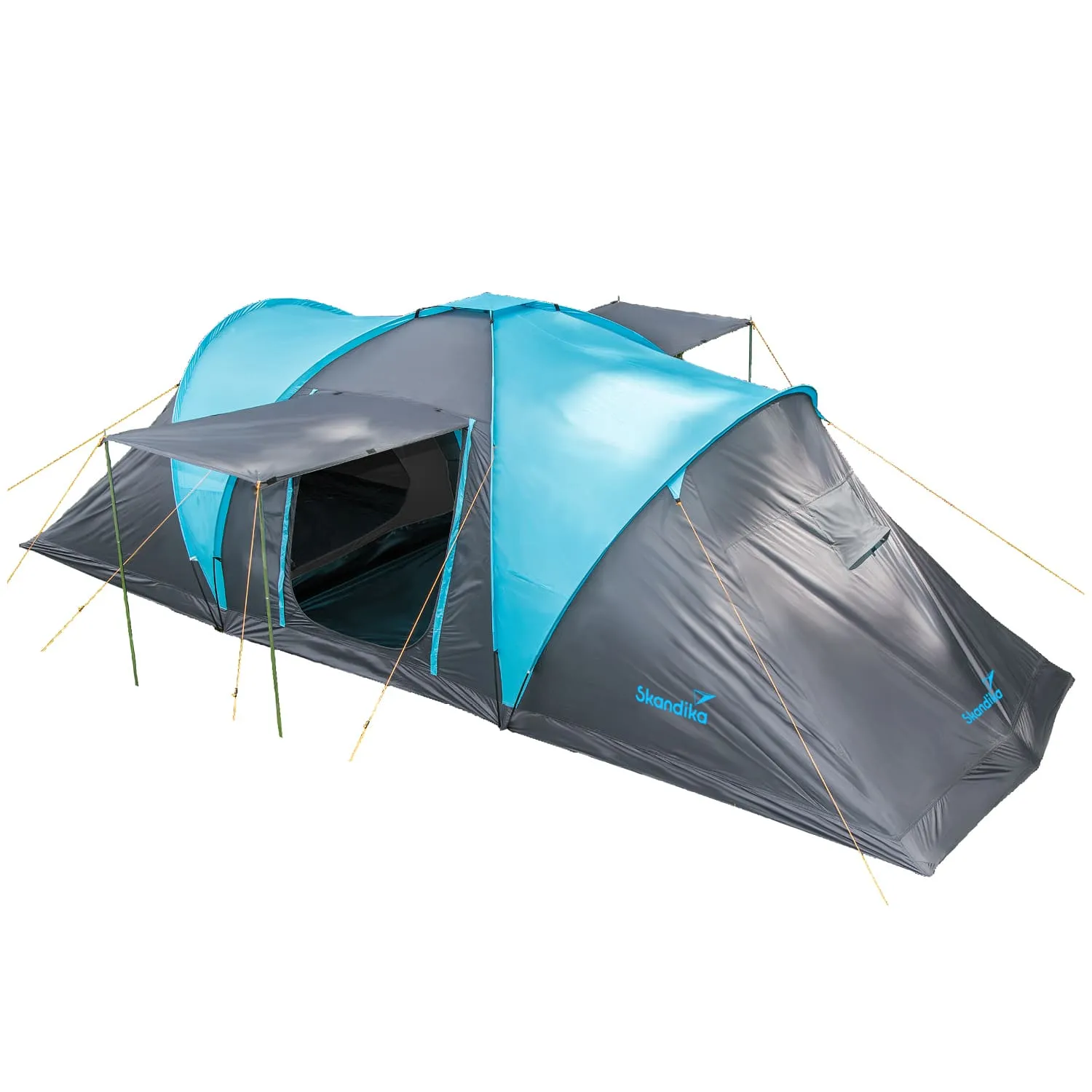
Hammerfest 6 Sleeper Protect dome tent
219,00 €RRP 319,00 €
A protective tent floor is essential for a cosy night in a tent – especially in changeable weather. It protects you from damp, the cold and crawling insects. Find out here what you should look out for when choosing a tent floor.

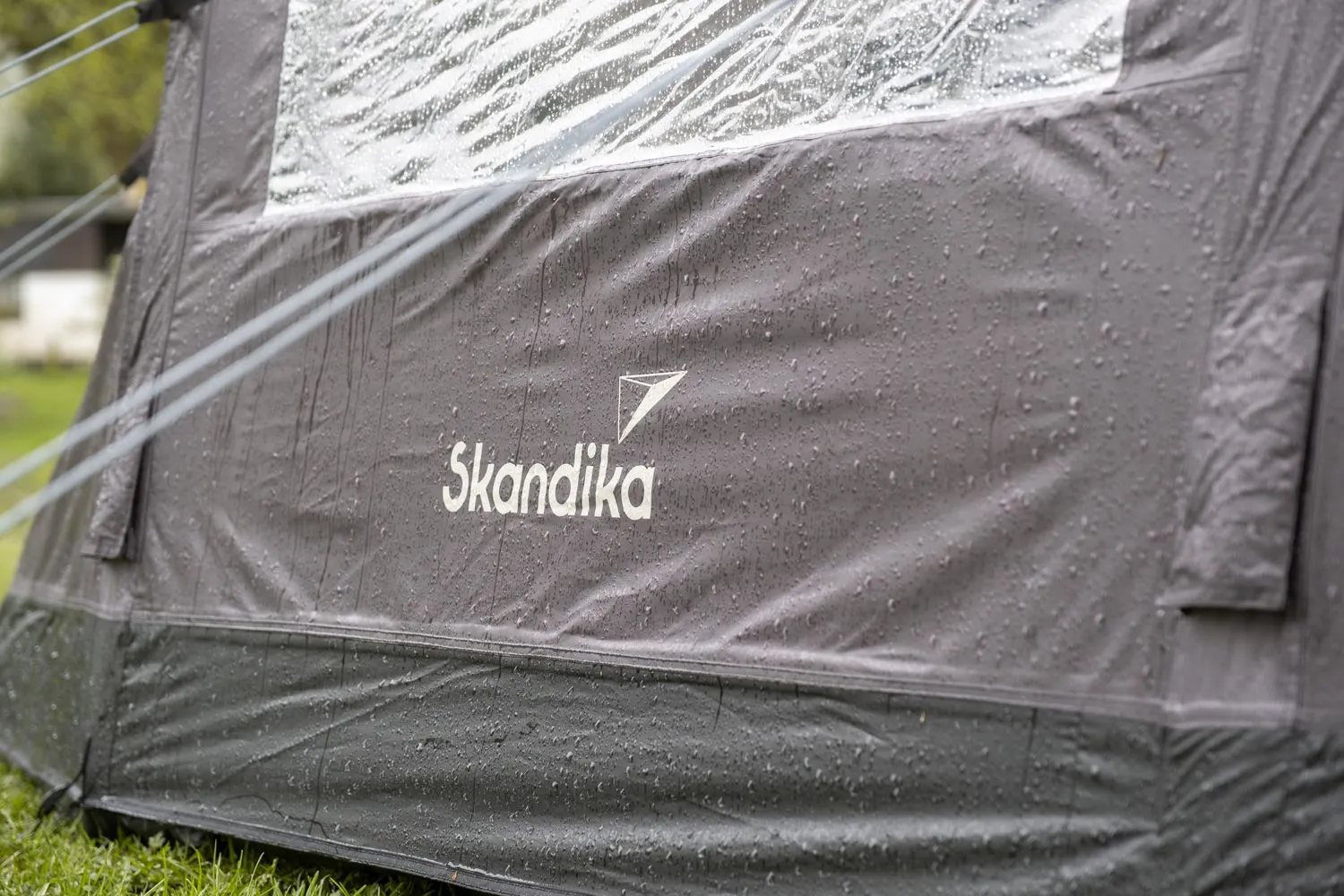
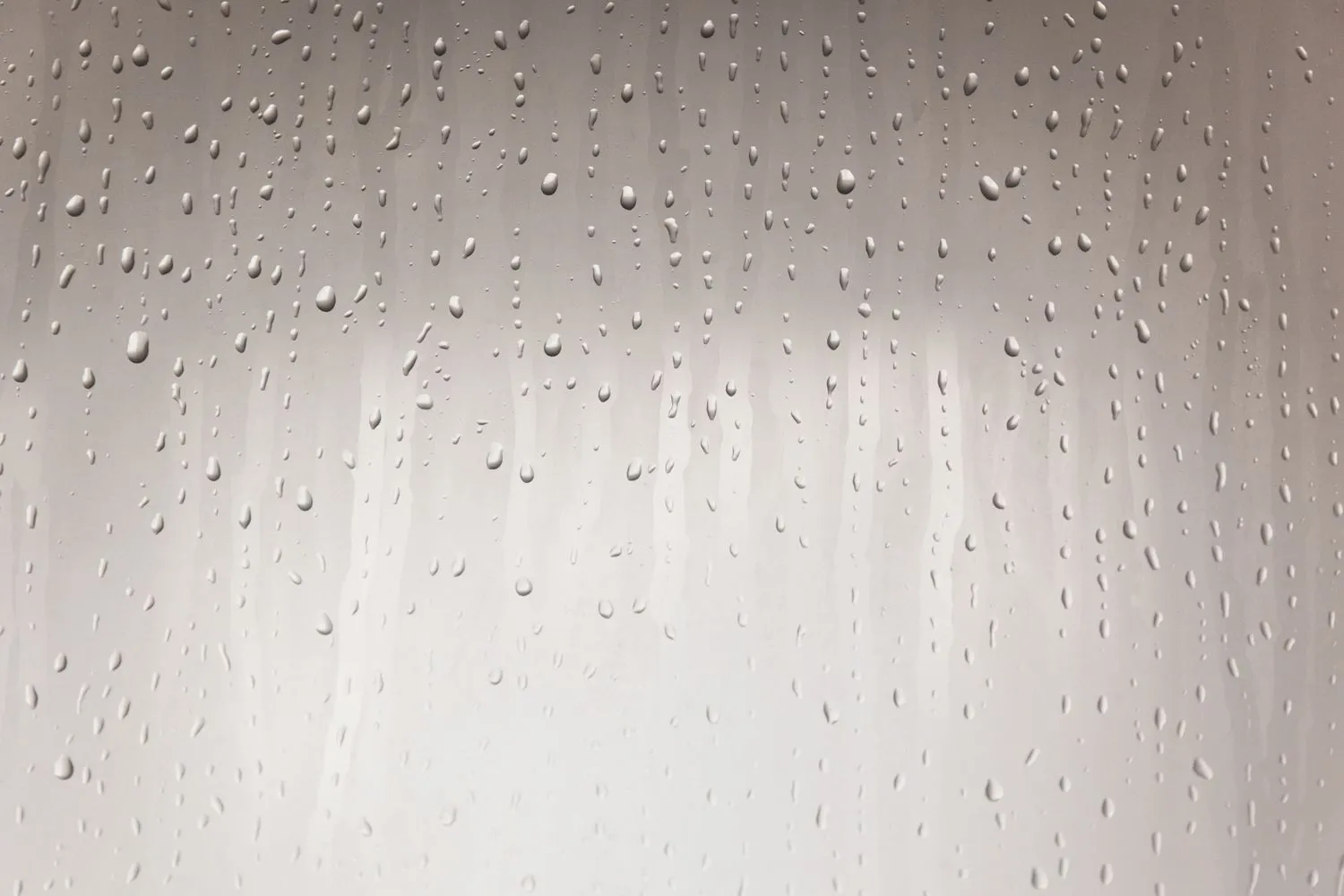
In the test, the fabric of the tent floor is placed under a water column in the laboratory. The higher this value, the longer the tent fabric remains waterproof.
Just like the water column for tents, the water resistance of the material is given in millimetres and describes how much water pressure the material can withstand before it lets water through.
Please note, however: unlike in the laboratory, the tent floor is often subjected to greater pressure than in laboratory conditions due to your own body weight, camping equipment and uneven ground. It is therefore important to look for high values.
The groundsheet of your tent should have at least a water column of 5,000 mm – ideally 8,000–10,000 mm. The higher the water column, the more waterproof the material and the better you are protected from moisture. So it really depends on where you’re camping. If you’re off on a summer holiday with few rainy days and low ground dampness, a very high water column might not be as important as it would be on a trekking trip with mixed weather.
Almost all our tent floors have a water column of 10,000 mm. This ensures you’re well protected against all weather conditions and ground types.
>✓ 10,000 mm tent floor water column in almost all Skandika tents
The material used for the tent floor should be sturdy and hard-wearing, as well as waterproof. Furthermore, the tent floor accounts for a large proportion of the tent’s weight. This is particularly important to bear in mind on trekking trips. There are essentially three different types of tent floor material to choose from:
With a sewn-in tent floor, the floor of the tent is firmly attached to the tent walls, so that there are no gaps between the floor and the walls. This type of floor is often referred to as a ‘tub floor’. You can recognise our tents with a sewn-in floor by the ‘Protect’ label, as this provides ideal protection against damp and small creatures outside the tent.
A sewn-in tent floor provides maximum protection against water, dirt and insects, as there are no open gaps through which anything could get into the tent. This is a major advantage, particularly in bad weather or on dirty ground. This means you’re completely shielded from the outside. It also protects against the cold, as air cannot pass directly between the tent floor and the tent walls.
What’s more, you don’t need to lay out and secure the tent floor, which makes pitching the tent much easier.
A brief overview of the advantages:

Are you looking for the right tent for your next camping holiday or trekking trip? Here you’ll find our weatherproof tents with a sewn-in floor.
A removable floor also has its advantages, particularly if you’re out and about in dry areas during the summer and want to quickly remove the floor for cleaning. What’s more, the gap between the tent floor and the tent wall ensures improved air circulation, especially in high temperatures.
Here is an overview of the advantages of removable tent groundsheets:

So bear in mind: Before your camping holiday, choosing the right tent floor is just as important as selecting the right tent material. To ensure the tent floor is waterproof, always look for a water column rating of at least 5,000 mm – preferably more if you’re travelling in damp areas or in changeable weather. Depending on your plans, consider the suitable material and think about whether a sewn-in or removable tent floor would be more practical for you.