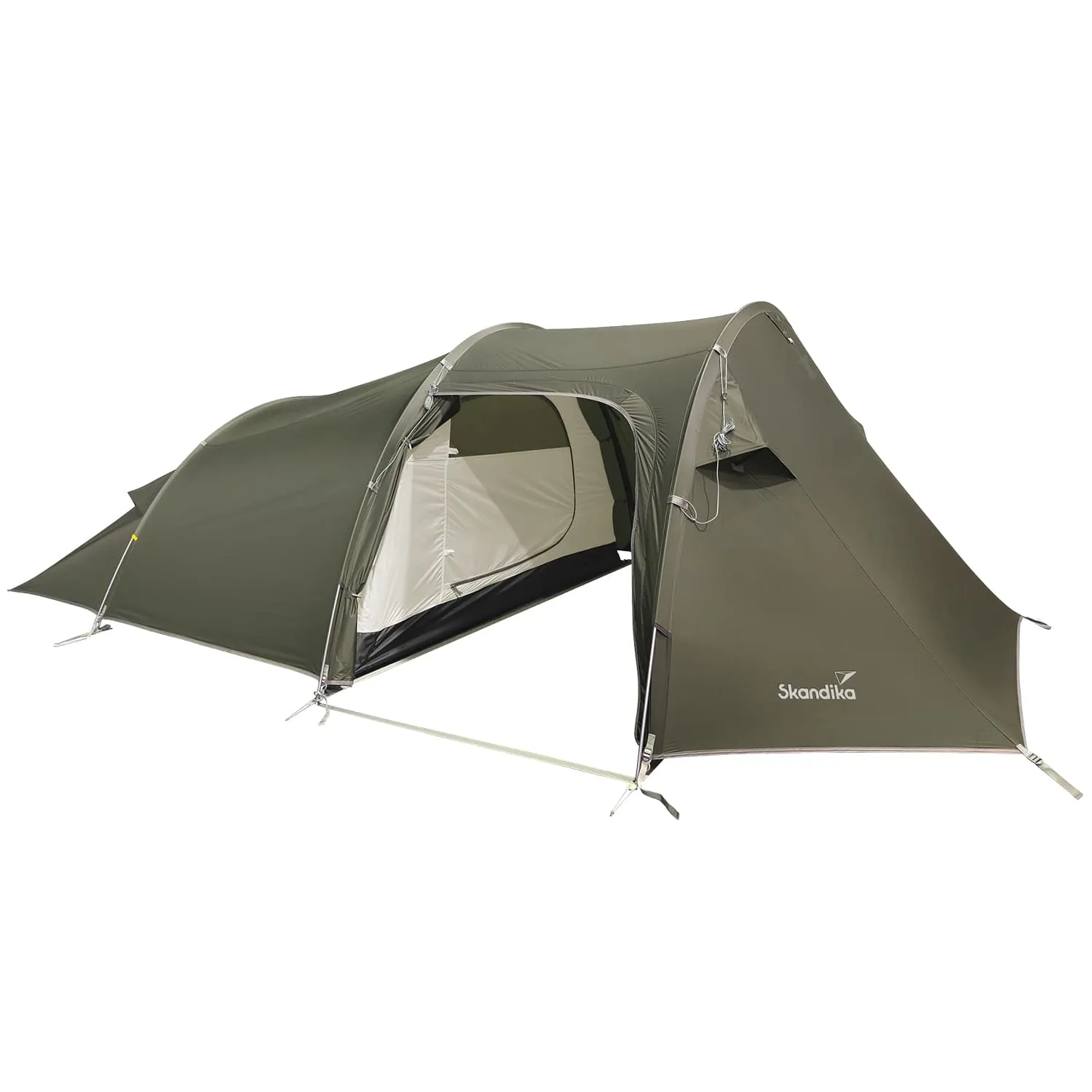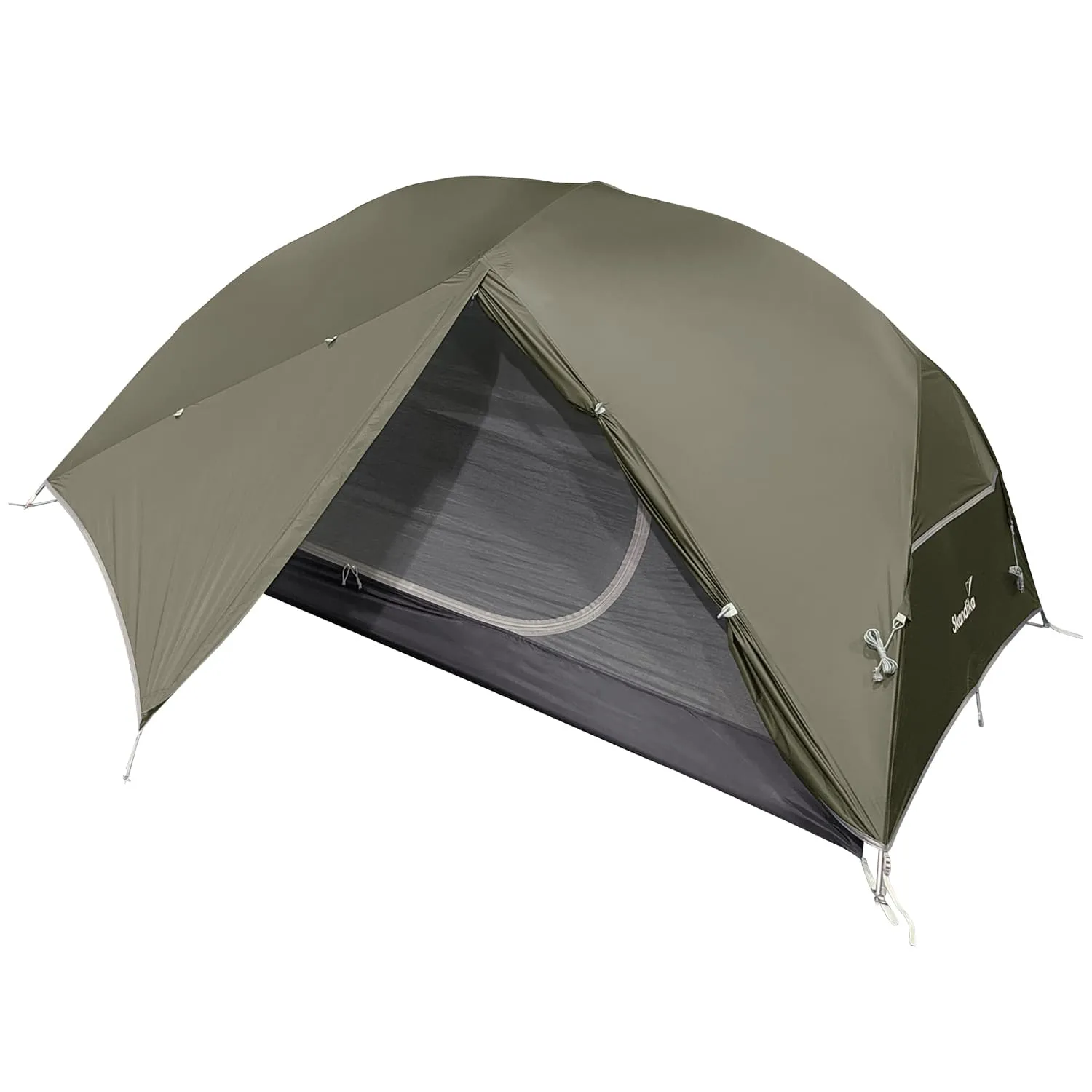
Trekking tent Vatn 2
229,00 €RRP 289,00 €
Is a hiking trip with a rucksack and tent through the countryside your dream? Then you should be prepared for all weathers and choose the right hiking tent to provide you with reliable protection from wind and rain. We’ll give you some tips on what to look for in a trekking tent so that you can have an unforgettable time.

Trekking tents are tents that you take with you on multi-day hiking trips – or trekking tours, as well as cycling trips. These are characterised by their particularly lightweight design, compact pack size and durability. This makes them ideal for multi-day hikes, even if the weather takes a turn for the worse.
As you’ll be carrying your trekking tent with you to your next destination and along the way, weight is a key factor when choosing the right trekking tent. The good news is that if you’re travelling with several people, you can best share the weight so that you all carry roughly the same amount.
An ultra-light tent weighs between 1 and 3 kg, depending on how many people it’s designed for. Bear in mind that a lightweight tent works out at roughly one kilogram per person. A lightweight 2-person trekking tent should ideally weigh no more than around 2 kg – the lighter, the better for carrying.
Generally speaking, you can gauge the weight based on how long you’ll be away. If you’re away for a few days, you won’t need as much food and kit as you would for two weeks. In the latter case, the tent should ideally weigh less so that you can still comfortably carry everything else.

The size of the lightweight tent depends, on the one hand, on the number of people and, on the other, on the length of the trip and what you’re taking with you.
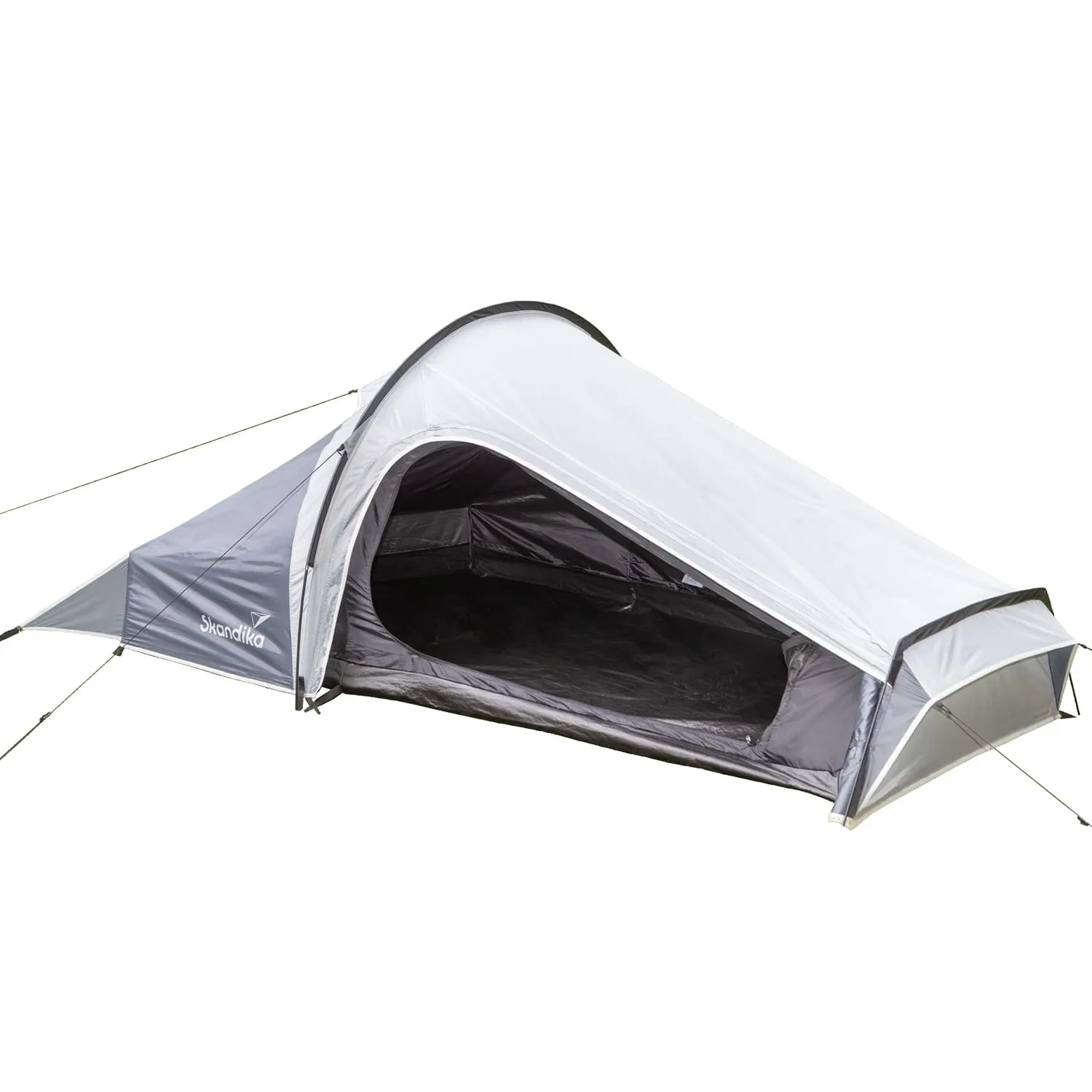
One-person lightweight tents – also known as bivouac tents – are particularly compact and ideal for one person if you’re setting off on your own. Make sure you still allow space in your tent for additional kit to avoid having to store anything outside the tent.
Trekking tents for 2 or 3 people require a bit more storage space, as everyone will be carrying their own hiking gear. In this case, a larger vestibule or a slightly larger tent is needed so that you can stow everything away. Our Oteren trekking tent offers the ideal layout for this as a lightweight 3-person trekking tent. What’s more, the included awning allows you to cook a quick meal if the weather doesn’t allow you to sit outside. After all, comfort shouldn’t be neglected, as a restful night’s sleep on trekking tours is vital for starting the next day feeling refreshed and full of energy.
It’s practical – though not strictly essential – if you can at least sit upright inside the tent. This makes it much more comfortable. A trekking tent with standing room is even more comfortable, but it’s correspondingly larger and heavier.
If there are more than 3 people, it’s better to opt for two 2-person trekking tents, as this is usually the lighter option and also provides more space for everyone.
When it comes to hiking tents, it’s important that they’re made from lightweight and durable materials, so that your trek remains a fond memory and you don’t just end up remembering the weight you were carrying on your back.
Lightweight tent fabric, such as nylon, is ideal for a trekking tent. This fabric is particularly robust and durable. What’s more, nylon weighs less than other fabrics, such as polyester. Our lightweight tents Vatn and Oteren feature a silicone coating on the outer tent for high UV resistance and an extra tear-resistant stitching system.
It’s also handy that, in very good weather, you can remove the outer tent and simply sleep in the mesh inner tent. This is ideal, particularly in warmer regions. This way, you’re still protected from insects and other creepy-crawlies, whilst effectively sleeping under the open sky.

Generally speaking, tents with a water column rating of 1,500 mm or more are considered waterproof (according to EU standard DIN ISO 10966). All our outer tents in the Ultralight range have a water column of 3,000 mm. These can withstand heavier downpours, so you can make yourself nice and cosy and snuggle up in your tent after a long hike.
When buying a trekking tent, make sure the poles are made of a material such as aluminium. This makes the tent lightweight yet sturdy. Pre-assembled aluminium poles with colour-coded sections, as found on our Vatn trekking tent, allow for quick assembly when, after a long day on your feet, all you want to do is crawl into your sleeping bag.
When it comes to trekking tents, a distinction should be made between the classic dome and tunnel tents. There are also bivouac tents and simple tarps. Below, we explain which type is best for whom, and what each tent style is particularly well suited for.
Tunnel tents are usually slightly more comfortable due to their shape, as they offer more space than dome tents despite having fewer poles. However, they must be properly pitched and therefore require a little more space. Dome tents, on the other hand, can usually stand free, which is handy in the mountains when it’s not possible to secure pegs. They are also easier to reposition and take up less space. Nevertheless, try to find a way to pitch the tent with guy ropes whenever possible. This makes your trek safer and provides better protection against the wind.
Tarps are simple structures that are more like a sunshade. They do not offer the comfort of a full tent, as they merely provide shelter from above or from the sides. However, this design saves a fair bit of weight and, as it has no floor, it is not considered wild camping. This means you can pitch the tarp more or less anywhere. The tarp can be secured, for example, to trees, or hiking poles can be used to stretch it out. It’s important to consider where you’re currently travelling and whether there’s somewhere to anchor it, or whether protection from above is sufficient.
Bivouac tents are ideal for one person. They are particularly light and quick to pitch. However, they offer the least amount of space. That said, the purpose of a bivouac tent is simply to provide a place to spend the night so that you’re fit and ready for the next day.
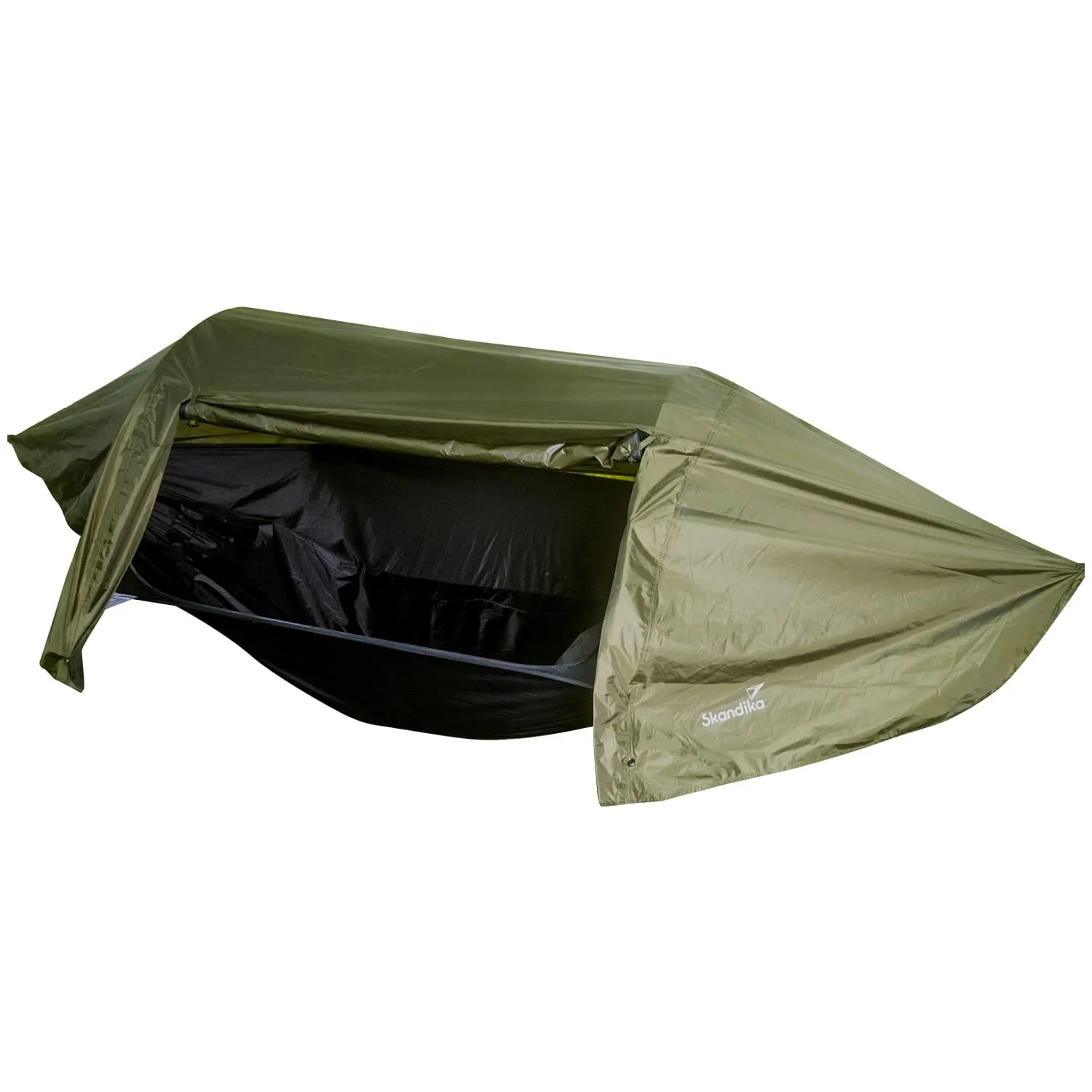
Hammock tents are similar to bivouac tents. Much like tarps, the hammock tent is not considered a tent, so you can simply stretch it between two trees and spend the night in the great outdoors. The advantage, however, is that this design provides all-round protection, keeping you safe from the cold and damp ground. Weighing just 1.9 kg, our hammock tent is very light and therefore perfect for travelling.

When buying a trekking tent, make sure it is compact and lightweight, and suitable for the right number of people. You’ll also need to consider the location of your trekking holiday when deciding on the shape of the tent, for example. With the right hiking tent, you’re sure to have an unforgettable trekking trip.
If you need any more tips on what you absolutely mustn’t forget for your trekking trip, why not take a look at our trekking packing list? Here you’ll find everything from camping kit to food and other important essentials that you should bear in mind for your trip.