Ergonomic training and correct posture
Why good posture matters, and not just at work
When you think of ergonomics, you probably immediately picture your office chair or desk. But ergonomic posture isn’t just important at work: when it comes to sport, too, good posture is key to long-term health and performance. We’ll explain what ergonomics actually means and how you can apply it to your everyday life. We’ll also show you why ergonomics is important for your regular workout too.

What does ‘ergonomic’ mean?
Ergonomics is concerned with designing working conditions and environments in such a way that they are optimally tailored to human needs. This can minimise strain, boost your efficiency and protect your health.
The term ergonomics comes from Greek and literally means ‘laws of work’. It is composed of ergon, meaning work, and nomos, meaning law.
In practice, therefore, ergonomics means: It is not people who should adapt to their environment, but the environment that should adapt to people.
What characterises good ergonomic posture?
An ergonomically ideal posture is characterised by your body remaining in a natural, relaxed and stable position. To maintain a healthy posture, you should bear the following points in mind:
- Straight spine
Try to maintain the natural double-S curve of the spine without overextending it or hunching your back.
- Balanced weight distribution
Your body weight is distributed evenly across both sides of your body. This helps you avoid uneven strain and prevents poor posture in the long term. - Relaxed shoulders
Your shoulders should hang loosely and not be pulled up or rotated forwards, to protect you from tension in the shoulder and neck area
.- Natural joint position
Ensure your joints are in a neutral position. They should not be overextended or bent at an angle
.- Active stabilisation
The deep muscles in your abdomen, back and pelvic floor provide stability when you maintain an ergonomic posture and prevent unnecessary tension.
Good posture therefore enables efficient movement patterns, prevents incorrect strain and reduces the risk of injury. So make sure you maintain a healthy posture even outside your working day.

When is something ergonomic?
So, something is considered ergonomic if it aligns with your body’s natural movement and posture patterns and prevents strain. Whether sitting, standing or exercising – ergonomics means supporting the body in such a way that it can perform its tasks effortlessly and without harmful side effects. What’s more, maintaining an ergonomic posture can help prevent injuries and muscle tension, whilst boosting your general well-being.
Ergonomics doesn’t stop at the desk – Why ergonomics is also crucial when doing sport
Ergonomics is often associated solely with the workplace. Yet these principles are also crucial when it comes to exercise: poor posture whilst exercising can lead just as easily to tension, joint problems or even injuries as a poorly adjusted office chair.
Anyone who makes a point of maintaining good posture in their everyday life should definitely carry this habit over into their training.
Why is ergonomic training so important?
Ergonomic training has many benefits – both for your health and for your performance. The positive effects include the following
:- Protection against strain and
injuryJoints, tendons and the spine are relieved of strain and remain healthy in the long term.
- More efficient movement patterns
Ergonomic movements make optimal use of the body’s strength and save energy
.- Faster recovery
Through natural exertion, your body recovers faster and more effectively after training. - Improved training performance
When you train without placing undue strain on your body, you make faster progress in strength, endurance and flexibility
.- Prevention of postural problems
Ergonomic training actively combats poor posture, tension and muscular imbalances.
How can I train ergonomically?
To train ergonomically, you should bear in mind a few basic points to ensure your training has a positive effect on your body:
- Correct posture
Throughout the exercise, you should maintain a natural posture to avoid placing undue strain on your body. - Adjustable exercise equipment
For an ergonomic workout, you need equipment that you can adjust to suit your individual body measurements. Particularly with endurance equipment such as ergometers, the correct seating position plays a crucial role in protecting your joints and ensuring the effectiveness of your workout. You should therefore adjust the equipment and weights to suit your individual height and flexibility.
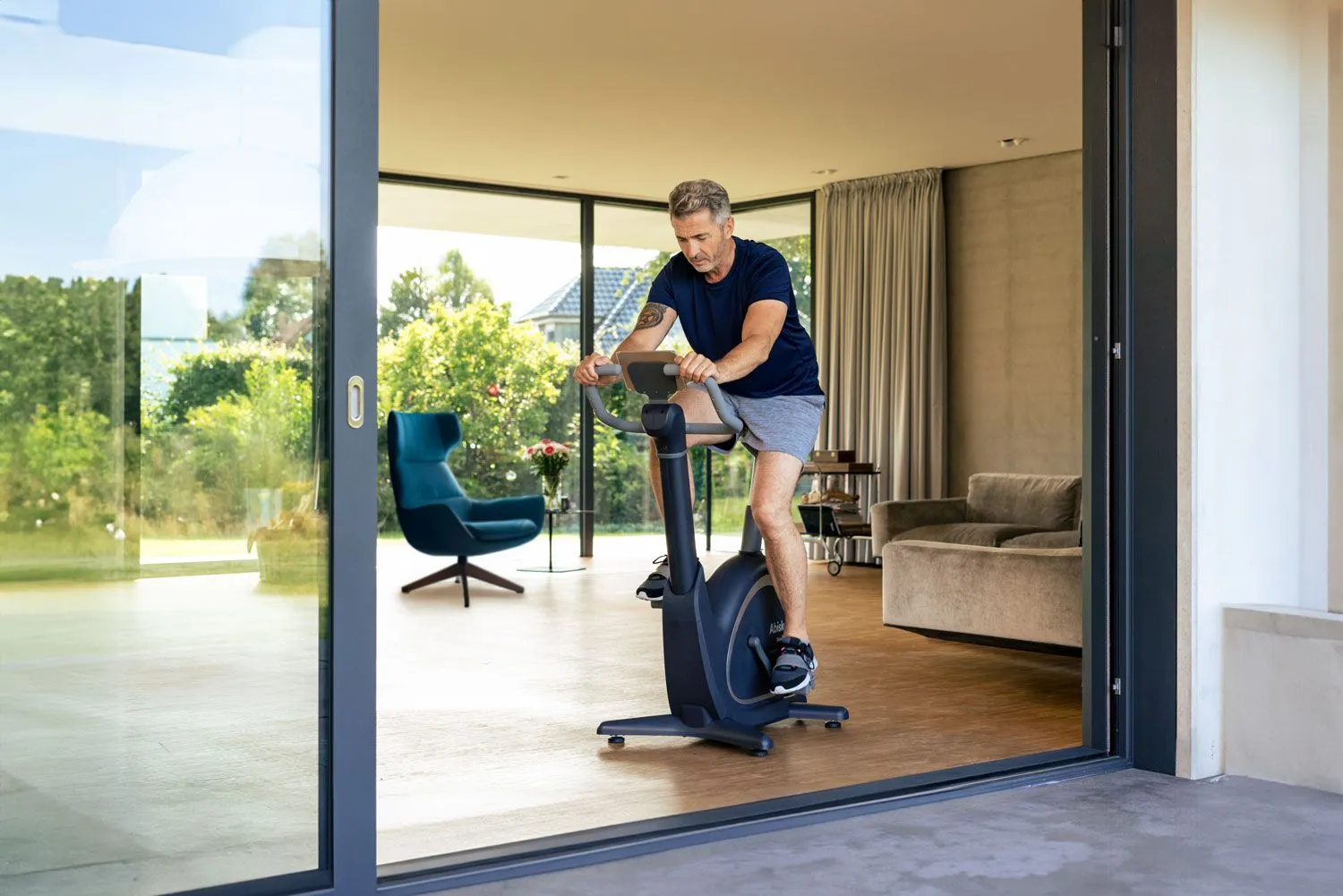
Our Abisko ergometer, for example, has been specially designed to adjust automatically to the body proportions of the user. Thanks to the automatic adjustment of the saddle and handlebars via the app, it guarantees an optimal training posture – regardless of height or leg length. This helps ensure an ergonomically correct sitting position and ensures a workout that is particularly gentle on the joints – ideal for avoiding strain and boosting efficiency.
In addition, the adjustable saddle supports the natural alignment of the spine. This not only minimises strain on the joints, but also efficiently improves endurance performance.

- Proper movement technique
Movements should be fluid, controlled and performed within a natural range of motion, without forced postures. - Strengthening the stabilising muscles
Well-trained core and deep muscles provide long-term protection for the spine and joints
.- Personalised workload management
Training intensity and volume should neither be too easy nor too demanding for you: Ergonomic training is always tailored to your own capabilities.
You can only achieve the best results from training when your body and posture are in harmony.